Explainers
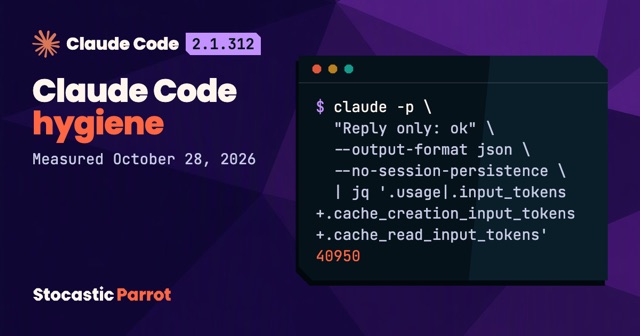
Claude Code hygiene
You know what you load on every request, you turn off what you don’t use, and you move hard rules into permissions: the monthly routine, with measurements from my setup and a prompt that does the inventory for you.
 Follow on Telegram
How it works
How it really works, explained without the word “magic.”
Notify me on Telegram (in Italian)Explainers
You know what you load on every request, you turn off what you don’t use, and you move hard rules into permissions: the monthly routine, with measurements from my setup and a prompt that does the inventory for you.

Explainers
In a workflow, you write the steps in code. In an agent, the model generates them one turn at a time. I explain what the difference costs (about 4 times the tokens of a chat, according to Anthropic) and the rule for choosing before you start.
Explainers
After compaction, an agent broke an explicit constraint in 30 runs out of 100, compared with 0 before (Wang et al., July 2026): the summary keeps the task and loses the rails.

Explainers
The frontend has relied on three monopolies (interface, persuasion, and decision), and it’s losing all three. With personal agents, value moves to APIs, MCP, A2A, x402, and ERC-8004, and a website has to become queryable by a machine, not just convincing to a human.

Explainers
When AI agents search, compare, and pay on our behalf, the web moves from user experience to machine experience: what happens to attention, work, and social control, from x402’s pay-per-request payments to prices falling toward marginal cost.