Toolbox
Octopus
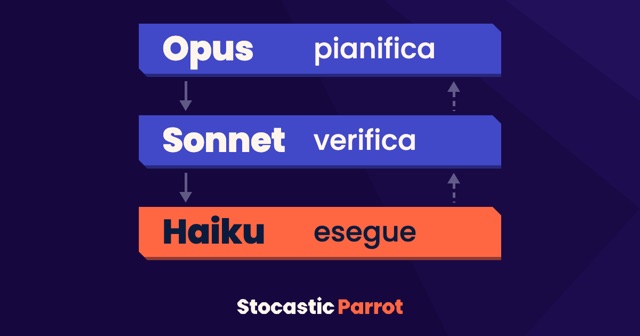
A Claude Code command that splits the work across three models: Opus plans, Sonnet checks, Haiku executes.
What it’s for
The most expensive model only where it counts
Opus makes the plan and decides; Haiku does the mechanical work, Sonnet the checks and the integration.
Tests first, then opinions
Tests, typecheck, lint and build come before any model’s judgment.
Less context resent on every turn
With its settings, auto-compact kicks in around 367k tokens instead of 967k, and agents that wait keep their cache for an hour.
How it works
The three models
Every task starts at the cheapest tier
And it moves up only when an attempt fails.
Opus 5.5 plans
plan, routing and adjudication
Haiku 5.5 executes
mechanical implementation, reconnaissance, searches
Sonnet 5.5 checks
checks and integration, fresh-context review
Opus 5.5 reconciles
compares the result with the original request
Diagram from the Octopus README

Every task starts at the cheapest tier. And it moves up only when an attempt fails. 1. Opus 5.5 plans (plan, routing and adjudication), then “each task with its written brief”; 2. Haiku 5.5 executes (mechanical implementation, reconnaissance, searches), then “tests, typecheck, lint and build first”; 3. Sonnet 5.5 checks (checks and integration, fresh-context review), then “the end-to-end check”; 4. Opus 5.5 reconciles (compares the result with the original request). From step 3 back to step 2: “the retry, with the real error.” Diagram from the Octopus README.
If an attempt fails it moves up: Haiku, then Sonnet, then Opus, at most 2 attempts per tier.